
About this course
This training is designed to offer a valuable alternative to a traditional medical model for understanding mental health challenges. It emphasises the importance of addressing power imbalances and threats to fundamental human needs that affect individuals’ lives. Informed by the Power Threat Meaning Framework (Johnstone and Boyle, 2018), this training offers arts-based learning opportunities to deepen understanding of working from a trauma-informed arts psychotherapy perspective.
By integrating the arts, this approach facilitates deep reflection on the emotions elicited by personal stories within a trauma-informed framework. It seeks not only to understand but to engage empathetically with the complex narratives that shape people’s experiences of mental health difficulties.
Attendance certificates can be issued on request.
Skills You will Learn
- Introduce the Power Threat Meaning Framework (Johnstone and Boyle, 2018), to move beyond medicalisation.
- Understanding people from the point of view of what has happened to them, rather than what is wrong with them.
- Utilising the arts to help teams reflect on feelings evoked by client stories.
- Enhance understanding of the service user’s embodied or psychological responses to trauma.
- Understand how power is operating in the service user’s life and the possible impact of power abuses on their core needs.
- Gather staff perspectives of the service user’s difficulties based on the power imbalances and threats to core needs operating in their lives.
- Understand the service user’s threat responses (behaviours), based on a trauma informed formulation of their difficulties.
- Generate ways forward for the service user based on trauma informed understandings.
- Revisit staff feelings in response to the service user, in the light of reflections via the arts media and the trauma informed formulation.
Structure of the Day
09:30 – Arrival & settling
10:00 – Grounding & movement
Gentle embodied opening
10:15 – Trauma-informed foundations
Key principles & shared language
11:00 – Creative case exploration
Case study through art-based practice & reflection
12:15 – Trauma-informed formulation frameworks
Introducing PTMF & trauma-informed perspectives
13:15 – Lunch
14:00 – Group formulation & experiential movement practice
Applying learning to the case study
15:20 – Break
15:35 – Integration & next steps
Drawing together themes, practice ideas & learning
16:15 – Grounding & close
Final reflections and embodied ending
16:30 – End
Suggested reading
- Boyle, M. and Johnstone, L. (2020) A straight talking introduction to the Power Threat Meaning Framework: An alternative to psychiatric diagnosis. Monmouth: PCCS Books.
- Herman, J.L. (2022) Trauma and recovery: The aftermath of violence – from domestic abuse to political terror. New York: Basic Books.
- Johnstone, L. and Boyle, M. (2018) The Power Threat Meaning Framework: Towards the identification of patterns in emotional distress, unusual experiences and troubled or troubling behaviour, as an alternative to functional psychiatric diagnosis. Leicester: British Psychological Society.
- Nikopaschos, F., Burrell, G., Clark, J. and Salgueiro, A. (2023) ‘Trauma-Informed Care on mental health wards: the impact of Power Threat Meaning Framework Team Formulation and Psychological Stabilisation on self-harm and restrictive interventions’, Frontiers in psychology, 14. Available at: https://doi.org/10.3389/fpsyg.2023.1145100.
- Watson, J. (ed.) (2019) Drop the disorder!: Challenging the culture of psychiatric diagnosis. Wyastone Leys, Monmouth: PCCS Books.
- A Disorder 4 Everyone! | Challenging the Culture of Psychiatric - event spaces where people with lived experience and allies explore relational and socially grounded understandings of mental health.
Dates
29 April 2026Time
09:30 am - 04:30 pmDuration
Setting
Cost
The trainer
Gill Lock
Principal Arts Psychotherapist
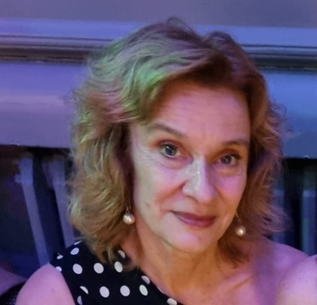
Gill Lock is a HCPC registered Principal Arts Psychotherapist who has wide experience of delivering Art Psychotherapy sessions for the NHS, both in the Mental Health service and the Learning Disabilities service for the past twenty years. She also undertakes this work in private practice. She has practiced meditation and yoga for the past twenty-five years and has delivered sessions and training on Mindfulness Based Art Therapy for fifteen years.
She became a Trauma Informed Approach Champion five years ago, undertaking trainings on trauma and bodywork, and team formulation from a trauma informed perspective. Gill then delivered regular trauma informed team formulation sessions and trauma informed training for staff teams with the acute inpatient setting in which she currently works.
Gill is the founder and director of Mindful Arts in Letchworth, Hertfordshire; a creative space to explore self-expression and self-awareness through Art Therapy, Mindfulness Meditation and Authentic Movement.
Carol Jaffier
Dance Movement Psychotherapist

Carol is an experienced dance movement psychotherapist who currently holds posts in CNWL NHS Kensington, Chelsea and Westminster, Brent, Harrow and Hillingdon working in inpatient acute mental health, older adults, rehabilitation and learning disabilities/autism adults and CAMHS. Although specialising in the psychotherapeutic use of embodied movement to promote social, physical, cognitive and psychological integration of the individual; Carol uses a trauma informed approach to deliver care effectively while considering previous life experiences. Before joining the NHS in 2018, Carol enjoyed a career in musical theatre and as a performer having studied at The Urdang Academy and Arts Educational London and gained her MA in dance movement psychotherapy from the University of Roehampton in 2018.
As well as contributing to ICAPT, Carol is a co-facilitator on the Arts Psychotherapies trainee forum and was co-project lead on the Arts for Staff Wellbeing Space.
Roz Urquhart
Art Psychotherapist
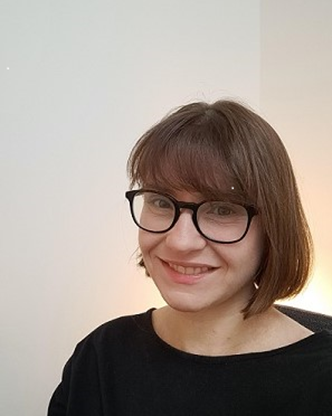
Roz qualified as an Art Psychotherapist in 2006 and as Psychoanalytic Psychotherapist in 2019. Roz has worked within variety of settings in Scotland and London in services for adults and children with Learning Disabilities, Autism and Mental Health difficulties within the NHS and charity sector.
Roz’s qualifications include BA (Hons) Illustration from The Edinburgh College of Art, MSc Art Psychotherapy from Queen Margaret University, Edinburgh, Diploma in Psychoanalytic Psychotherapy from The Arbours Association and full accreditation as a Mentalisation Based Therapy Practitioner with the Anna Freud Centre; she has also undertaken further training in supervision. Roz is registered with BAAT, HCPC, UKCP and is on the BPC roster of MBT practitioners.
Roz works part time for CNWL as Principal Arts Psychotherapist for Learning Disabilities services. In addition, Roz also works part time as a senior psychotherapist and trainer for a national charity for people with Learning Disabilities who have experienced trauma within the clinical service and training and consultancy service.